
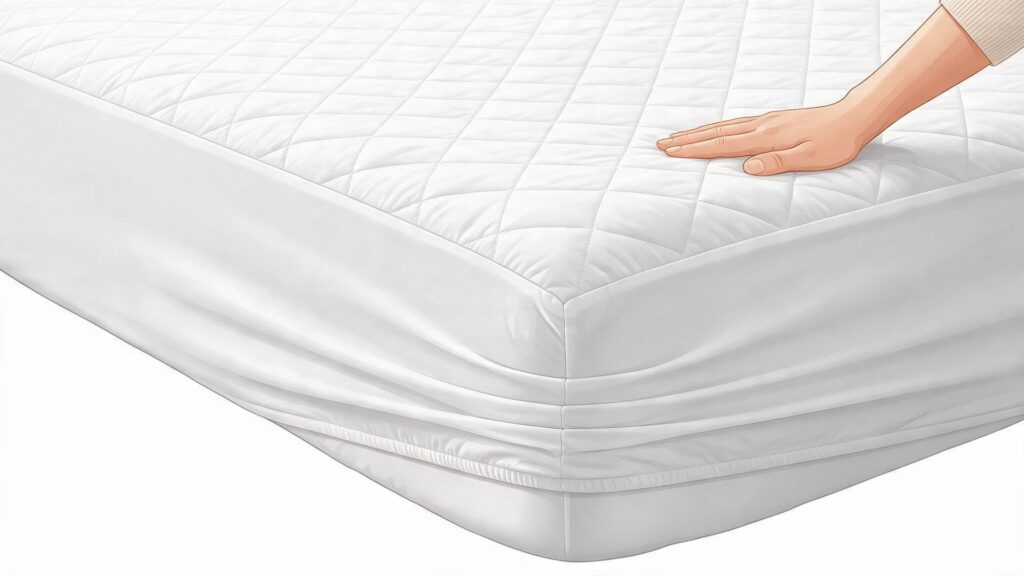
A mattress protector is a thin, removable cover that goes over your mattress. Your fitted sheet goes directly on top of your mattress protector. A protector is nothing like a mattress topper. The topper changes the way your mattress feels by adding a cushioned layer. A mattress protector is there to keep the mattress clean and dry.
A lot of people mistakenly assume that protectors are only good for protecting the mattress from spills. A good one protects the mattress from sweat, skin cells, body oils, dust and so much more. If there isn’t a barrier, this stuff soaks right into the mattress’ fibres and foam, where it breeds bacteria, smells, and dust mites.
Don’t overlook your warranty
Almost all mattresses sold in the UK come with a warranty. What people don’t realize is that once the mattress is stained or soiled that warranty is no longer valid. Manufacturers often turn down claims when they see proof of liquid damage, saying that it shows improper use instead of a problem with the product itself.
Different types of mattress protectors
Fitted protectors work like a fitted sheet. They use an elasticate band along the bottom of the protector to hug the sides of the mattress. Strapped protectors use elastic bands on each corner of the protector to anchor the protector to the mattress. These protectors only cover the sleeping surface of the mattress. They are a great choice for people who dislike wrestling with deep sheets. Full encasement protectors zip around the entire mattress, sealing all six sides. And with the recent increases in reports of bed bugs in the UK more people are considering this option. A sealed protector doesn’t give bed bugs anywhere to hide and it provides the strongest defence against dust mites too.
When figuring out the best type of mattress protector for your home you also need to think about what it is made from. Simple quilted cotton adds a soft, breathable layer. Towelling styles are absorbent and gentle. Waterproof protectors use a thin membrane bonded to the fabric and temperature-regulating ones pull heat away for hot sleepers.
Waterproof doesn’t mean sweaty
With a waterproof protector people worry that it will feel like sleeping on a plastic sheet. And while that is true with some of your older or cheaper designs can, it’s not a concern with newer protectors using a micro-porous film. This membrane prevents any liquid from passing through to the mattress while still letting water vapour and air to pass through. This means the bed breathes rather than trapping heat. If you sweat a lot at night while you are sleeping, never make the mistake of thinking that all waterproof protectors are the same. You want to look for ones that talk about breathability or vapour permeability specifically. However, one thing you must realize with any waterproof protector is the do rustle a bit, although a decent fabric top layer keeps this to a minimum.
Allergies and everyday health
If you live in the UK and have asthma, eczema or a dust mite allergy a mattress protector makes all the difference. Dust mites thrive in warm, humid bedding. They feed on shed skin and their waste is a common cause of allergy symptoms. A tightly woven or encasement protector creates a barrier mites can’t cross. Keeping them out lowers the allergens that build up inside the mattress and makes the sleeping surface easier to clean.
Getting the size right mattress protector
UK bed sizes are different from those in the US and continental Europe, so make sure that your protector fits the normal UK size. Never make the mistake of assuming the labels are interchangeable. Mattress depth matters just as much as the width and length. Mattresses have gotten deeper and if a protector has shallow corner pockets it will slide off a deep model during the night. You want to always check the maximum depth the protector is designed to fit.
Can you wash mattress protectors?
Most mattress protectors are machine washable, which is why they are a removable layer. Most experts recommend washing your protector every month or two to keep it fresh. If you have young children in the bed or allergies, you might want to wash it more often. For waterproof types, a warm wash of around 30°C to 40°C is recommended unless the care label states otherwise. Washing in very hot water can damage the waterproof layer, which makes the protector less useful. Using fabric softener can clog the fibres and reduce breathability, so try not to use it. In areas with hard water using a gentler detergent helps stop any mineral residue build up.
Can mattress protectors go in the dryer?
Most mattress protectors dry just fine in the dryer using a low or cool setting. Not to mention that a quick spin in the dryer helps the elasticated edges regain their snug fit. What you need to pay attention to is the heat. Too much heat is bad for waterproof mattress protectors. The heat can crack, melt or peel the membrane, which ruins the protector’s purpose. If yours is waterproof, keep the dryer on low heat or hang it out to dry. Non-waterproof cotton and quilted styles are a lot forgiving and can usually handle normal drying without any problems. For all mattress protectors the care label is the final word. And following it will always extend the life of the product.
Knowing when to replace your mattress protector
Even if you take great care of your mattress protector it is not going to last forever. Thinning fabric, a waterproof layer that no longer works or edges that have lost their stretch are all signs that it needs to be replaced. Because they are cheap compared to the mattress they are protecting, replacing one every few years is a small price to pay to keep the bed underneath in good condition.