
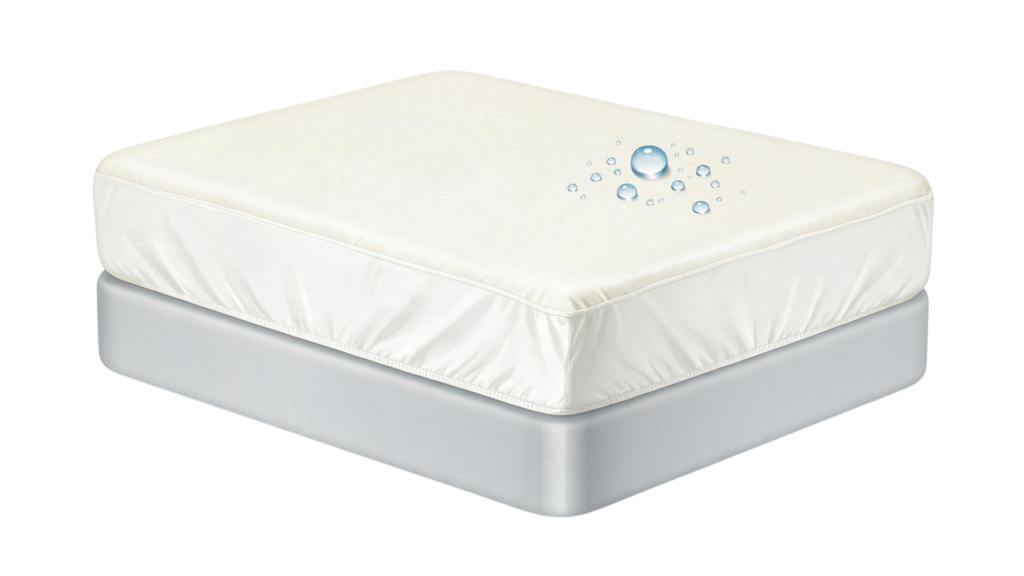
A mattress is one of the more expensive things we buy for ourselves, yet it’s one of the least protected. We use throw covers on the sofa and put cases on our phones, but we leave our mattresses exposed to years of sweat, spills, skin cells and dust.
A protector is not the same thing as a mattress topper. A topper is a thick, padded layer designed to change how the bed feels whether its adding more support or making the bed a little softer. A mattress protector is a thin, removable layer between your fitted sheet and the mattress. Lots of people will use both, with the protector on top of the topper.
The moisture nobody thinks about
When it comes to liquid and mattresses most of us are worried about spilled drinks. What we don’t think about is sweat. Many experts say that people lose around half a pint of liquid every night through sweat and breath. Spread that across hundreds of nights and a lot of moisture ends up soaking into the foam and fibres of the mattress.
When the weather is cooler, windows stay shut and condensation forms in British houses, making them very humid. Older homes often have damp beds, and when a mattress soaks up water, mould and mildew grow deep inside where you can’t see or clean it. The cover keeps the mattress dry and fresh for longer by stopping water from getting to it.
Are mattress protectors waterproof?
Your mattress protector stops moisture from reaching your mattress, so a lot of people assume they are all waterproof. While all protectors work to keep your mattress clean and dry, not all of them are waterproof.
Your basic quilted or fitted mattress protectors made from cotton or microfibre are absorbent not waterproof. These protectors add a washable barrier against sweat, skin and dust. However, if anything spills or a child has an accident during the night, the liquid will pass through to the mattress.
A waterproof protector has a thin membrane bonded to the underside, typically a polyurethane layer, that stops liquid from reaching the mattress. Waterproof protectors from our childhood were more like noisy crinkly sheets. Waterproof protectors have come a long way since then. Now protectors are quiet and breathable. They let water vapour and heat pass through while blocking actual liquid, so you are far less likely to wake up feeling clammy.
If you have young children, pets, or anyone prone to spills or accidents, a breathable waterproof protector is the best choice. If your only concern is general hygiene and dust, a quilted non-waterproof version may be all you need. Either way, always read the label because the two look almost identical once they are on the bed.
A cleaner bed
Mattress protectors don’t just protect your mattress from liquids. A mattress gradually fills with dead skin cells and those cells feed dust mites. And dust mites are one of the most common triggers for asthma, eczema and allergies. Keeping the mattress clean is a big deal with how many people in the UK are living with asthma or hay fever. As most of you already know you can’t wash a mattress, but you can take a protector off and wash it at 60°C. This temperature kills dust mites where a cooler washing cycle won’t.
Protecting more than the mattress
Most mattress warranties in the UK are voided once the mattress is stained. Manufacturers frequently refuse warranty claims on soiled mattresses for hygiene reasons and because a stain suggests it may not have been cared for. One unlucky spill could end up costing you a lot more than you bargained for. A protector keeps the warranty intact as it protects your mattress from all kinds of stains.
The same logic applies if you ever decide to sell your old mattress because you are moving or bought a new one. A clean and stain free mattress holds its value and its appeal. A stained one is difficult to sell as most people find they can’t even give a stained one away.
How do you use a mattress protector with an electric underblanket?
Bedding and electric blanket specialists all agree that the mattress protector should go underneath the electric blanket, not over it. So, when making up your bed for those cold winter months you want to follow this order: mattress, protector, electric underblanket, and fitted sheet. This lets the protector do its job of protecting the mattress while the blanket’s works to keep you warm.
You don’t want to put a waterproof protector on top of an electric underblanket because of heat. The waterproof layer can trap heat and moisture against the heating element. This increases the risk of the blanket overheating and reduces how well the blanket warms the bed. Keeping the protector below the blanket is the safer arrangement as it doesn’t trap heat around the electrical wires.
Always read and follow the instructions that come with your electric blanket. Some blankets are supposed to be layered differently when making up the bed. And some combine a heated element and a protector in one, which means you won’t have to worry about what one goes where. It is also worth following the basic electric blanket rules regardless of what protector you have.